
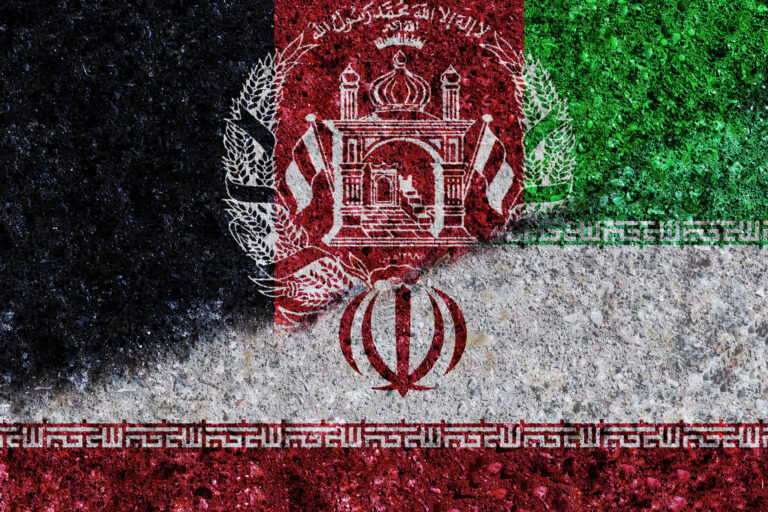
Iran appears politically unsettled once again, and the implications extend far beyond its borders. Since December 2025, demonstrations have been reported across several Iranian cities amid mounting public frustration. Persistent inflation exceeding 40 per cent, a sharply depreciated rial, international sanctions, and declining trust in political institutions have combined to produce a volatile domestic environment. These pressures have reignited debate not only about the durability of the Islamic Republic, but also about the regional consequences should Iran experience systemic political rupture.
For Afghanistan, the question is particularly consequential. The two countries are bound by a 921-kilometre western border, dense trade networks, linguistic and cultural overlap, and decades of population movement. Political shocks in Tehran have rarely remained confined within Iran. Instead, they have repeatedly reverberated across Afghanistan’s internal stability, ideological orientation, and regional positioning. Any serious disruption in Iran would therefore be felt acutely in Kabul.
From a strategic perspective, the manner of any regime change would matter as much as the fact of collapse itself. Dr Zia Ul Haque Shamsi, Defence Analyst and Director at the Centre for Aerospace and Security Studies (CASS) of Pakistan, argues that the pathway of transition would shape its regional impact.
“If regime is changed in Iran by force, it would be Western-friendly and would change the region for good, including Afghanistan”, he notes. A post-Islamic Republic Iran, particularly one aligned with the West, could recalibrate power balances across South and Central Asia.
A political rupture in Iran would not force the Taliban to revise their religious doctrine, but it could weaken their claim to ideological credibility. For more than four decades, the Islamic Republic has stood as the most durable modern example of Islamic governance in the region. Its survival, despite sanctions, diplomatic isolation, and internal unrest, has allowed Islamist movements to argue that religiously grounded political systems can endure external pressure. If that model were to fracture or give way to a secular, Western-aligned alternative, it would complicate the Taliban’s effort to present their own system as viable and sustainable. The impact would be symbolic rather than theological: it would affect how their rule is perceived domestically, regionally, and within the broader Muslim world, rather than altering the doctrinal foundations of their governance.
The material spillovers, however, would be complex rather than uniformly negative. Iran is one of Afghanistan’s most important economic lifelines. Despite sanctions, bilateral trade reached approximately $3.366 billion in 2025, with Iran supplying fuel, electricity, food commodities, and critical transit access. According to Ihsanullah Tipu Mehsud, a Pakistani journalist based in Islamabad who specialises in militancy and regional security, a change in regime in Iran presents both advantages and disadvantages for Afghanistan, particularly for the current Taliban-led Afghan interim government. Should there be a regime change in Iran, it might open up economic opportunities that have long been denied to Afghanistan.
“If the Iranian regime is overthrown, Afghanistan would gain in terms of trade because the sanctions and restrictions on Iran would be lifted. Iran serves as a valuable trade corridor for Afghanistan, extending to Turkey, Europe, and the Middle East”, Mehsud explains, noting that this could greatly lessen Kabul’s reliance on Pakistan for trade routes.
However, Mehsud warns that the economic advantages would come with significant strategic challenges. “If a liberal, pro-US or pro-Israel government replaces the Iranian regime, it would pose problems for Afghanistan. The Taliban government is fundamentally ideological and jihadi in nature. A secular or pro-Western Iran could lead to strategic issues and potentially serve as a base for anti-Taliban political and armed proxies”.
Yet these two trajectories may not easily align. A Western-oriented Iranian government seeking reintegration into global markets and closer alignment with Washington would likely prioritise stable relations with recognised states and major economic partners. In that context, deep economic interdependence with an internationally unrecognised Taliban administration may not rank high on Tehran’s strategic agenda. Trade expansion, therefore, would depend not only on sanctions relief but also on diplomatic recognition, political compatibility, and regional alignment. The economic opening could prove narrower than anticipated.
A post-sanctions Iran could also emerge as a significant economic actor in its own right. With vast oil and natural gas reserves and a strategic geographic location, Iran’s reintegration into global markets could transform regional trade dynamics. “If oil and natural gas exploration resumes and trade flows smoothly, Iran could become an economic powerhouse, which would also be very advantageous for Afghanistan”, Mehsud notes.
Yet any such benefit for Afghanistan would not be automatic. Economic spillovers would depend heavily on the nature of political relations between Kabul and Tehran, as well as the broader regional alignment that follows any transition. A globally reintegrated Iran might diversify its trade partnerships toward Turkey, the Gulf states, or Europe rather than deepen interdependence with a Taliban-led Afghanistan. Conversely, ideological friction or diplomatic estrangement between the two governments could constrain transit cooperation, energy exports, or investment flows. The economic upside, therefore, remains contingent rather than guaranteed.
Population movement represents another critical transmission channel. Iran currently hosts 3.4 to 3.6 million Afghans, including registered refugees and undocumented migrants. Large-scale instability or regime collapse could trigger forced returns or secondary displacement, placing severe pressure on Taliban governance structures already struggling to provide employment, basic services, and humanitarian access.
There are also important security dimensions. Mehsud emphasises this dual-edged nature of such a transformation. “On the militants’ front, it is believed that Al-Qaeda leadership, including Saif al-Adl, is present in Iran. A new regime would likely prevent Iran from being used as a corridor for Jihadists’ cross-border movements, creating strategic complications for the Taliban and their key Jihadists’ allies”.
Beyond militancy, Iran has historically acted as a counterweight to Sunni extremist dominance in the region while maintaining pragmatic, if uneasy, engagement with the Taliban. A weakened or collapsing Iran would disrupt this equilibrium, reshaping regional alignments. It could simultaneously reduce external constraints on Taliban rule while depriving Kabul of a critical regional interlocutor capable of balancing other powers.
These contemporary dynamics echo an earlier precedent. The most consequential historical example of Iranian political spillover remains the 1979 Iranian Revolution. The collapse of the Pahlavi monarchy and the establishment of the Islamic Republic did more than transform Iran’s internal order; it generated a powerful ideological ripple effect across the region. In Afghanistan, which entered a decade-long war following the Soviet invasion later that year, revolutionary Islamic discourse helped legitimise religious resistance. Themes of clerical authority, anti-imperial struggle, and political Islam reinforced Islamist mobilisation throughout the 1980s, even though Iran was not a primary military actor in the conflict.
That influence operated largely through ideas and networks rather than force. Religious institutions, cross-border clerical ties, and shared Shiite and Persian-speaking communities, particularly among the Hazara population (estimated at 10–15 per cent of Afghanistan’s population) enabled Iranian ideological currents to travel eastward. The episode demonstrated how political transformation in Iran could reshape Afghan dynamics without direct intervention.
None of the above suggests that turmoil in Iran would automatically precipitate the Taliban’s collapse. Regime durability ultimately depends on internal cohesion, coercive capacity, and elite bargaining as much as external shocks. Yet Afghanistan has never existed in isolation. Political contagion, economic disruption, ideological delegitimisation, and refugee flows have long crossed the Iran–Afghanistan border with ease.
In 1979, Iran’s revolution strengthened Islamist resistance in Afghanistan and redefined the political role of religion during a period of foreign occupation. A future collapse of the Iranian state, if it were to occur, could prove equally transformative, this time through shifts in regional power balances, economic connectivity, and cross-border social pressures. In a region where borders are porous and political legitimacy is continually renegotiated, upheaval in Tehran is unlikely to remain contained. Once again, developments in Iran may cast a long and complex shadow over Afghanistan’s stability.