

On January 31, 2026, Pakistan’s restive southwestern province of Balochistan witnessed one of the most coordinated insurgent operations in recent memory. Around 40 attacks erupted across 12 districts, targeting urban centres, security installations, and key infrastructure within hours. The operation, dubbed Herof-2, was claimed by the Balochistan Liberation Army (BLA), a separatist militant group seeking independence for Balochistan. The scale and synchronisation of the attacks revealed a level of planning, communication, and operational discipline that startled both local authorities and analysts. Footage released by the group showed standardised uniforms, small arms such as US-made M249 machine guns and M16A4 rifles, as well as Bulgarian OGi-7MA rockets, alongside tactical gear including AN/PVS-7 night vision devices and ballistic helmets. Notably, the visuals also featured the BLA’s newly announced drone unit, the “Qazi Aero Hive Rangers” (QAHR), appearing consistently across multiple clips. While such imagery cannot independently verify sourcing or supply chains, the equipment on display aligns with items commonly circulating in regional illicit markets.
The Baloch Liberation Army (BLA), designated a terrorist organisation by Pakistan, the United States, and the United Kingdom, is nevertheless viewed by segments of the Baloch population as a force fighting for self-determination, an image the group actively reinforces through its propaganda. The insurgency itself is not new; Balochistan has witnessed at least five separatist uprisings since 1947, with the latest phase emerging in the early 2000s. Initially centred on demands for greater political autonomy and a fair share of natural resource revenues, the movement gradually escalated into calls for outright independence. The BLA, which took shape in the late 1990s under figures such as Balach Marri, gained momentum amid growing resentment toward the federal government. The insurgency intensified sharply after the killing of prominent nationalist leader Nawab Akbar Bugti in 2006 during the rule of Pervez Musharraf, an event that remains a turning point in Baloch resistance narratives. More recently, violence has surged again, exemplified by incidents such as the March 2025 hijacking of the Jaffar Express by a BLA faction, which resulted in the kidnapping of more than 400 passengers and the death of at least 26 hostages.
The recent Operation Herof-2 marked a clear departure from the BLA’s earlier, more fragmented tactics. Its scale and synchronisation point to notable improvements in command-and-control, planning, and communication, reflecting a transition toward a more structured, multi-unit militant organisation. The group now appears to operate through specialised components, including the Majeed Brigade for suicide missions, ZIRAB as an intelligence wing, STOS for special tactical operations, the Fateh Squad for high-value targeting, and the recently introduced QAHR unit focused on drone operations. This internal differentiation suggests a deliberate effort to professionalise the insurgency, streamline command functions, and enhance operational efficiency, features more commonly associated with mature militant organisations than with loosely coordinated insurgent networks.
Estimates of the group’s manpower remain imprecise but indicate a trajectory of expansion. Around 1,000–1,200 fighters are believed to have participated in Operation Herof-2, a significant increase from earlier estimates of roughly 600 active militants in 2020. Some more recent claims place the figure as high as 2,000 to 3,000 personnel when accounting for facilitators, logisticians, and support networks. Beyond its core fighting force, the BLA also appears to draw on a wider ecosystem of sympathisers and recruiters that likely extends into the several thousands, providing organisational depth and resilience even if its frontline combat strength remains limited.
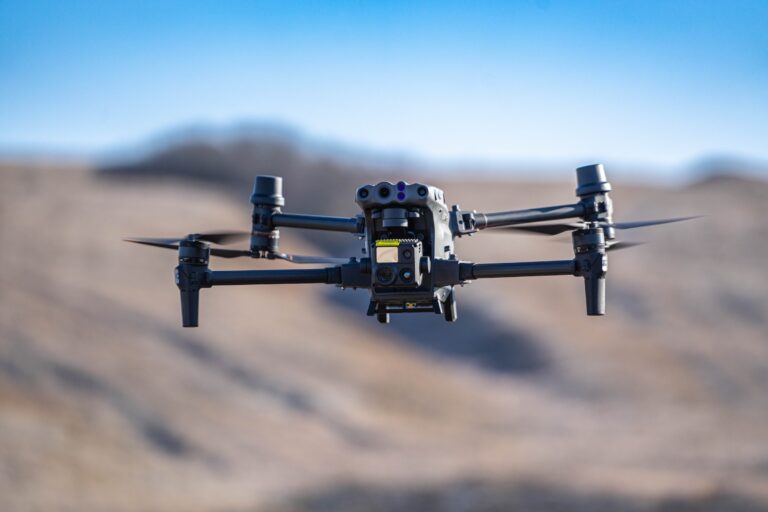
Much of the recent attention surrounding the BLA, however, has focused on its supposed embrace of drone warfare. These systems are largely commercial off-the-shelf quadcopters, similar to widely available DJI-type platforms used by TTP, acquired through local markets, black-market channels in Afghanistan, and smuggling routes along the Iran–Pakistan border. As with TTP, the devices were locally assembled, plastic bottles filled with 400-700 grams of explosives, which were detonated with grenades. Yet despite such experimentation, there is no verified evidence that the BLA has employed drones for sustained or targeted kinetic attacks. Their primary utility remains in reconnaissance, target observation, and the production of propaganda content. The establishment of the QAHR unit reflects institutional intent to expand into this domain, but intent should not be conflated with capability.
“At present, there is no credible indication that the BLA possesses advanced or state-supplied drone systems; its approach remains rooted in the limited adaptation of commercially available technologies”, a Pakistani security official noted.
Claims of sophisticated external support further complicate the narrative. Some reports suggest that drone technology may have reached the BLA through transnational militant networks or components sourced from looted NATO supply chains during the Afghanistan war, while others allege backing from foreign intelligence agencies, particularly India. Yet such assertions remain unverified and should be treated with caution. A more grounded assessment is offered by recent reporting from the United Nations Security Council, which notes that despite sustained counterterrorism pressure from Pakistan, the BLA has retained operational relevance and, at times, collaborated with Tehreek-e-Taliban Pakistan and Islamic State Khorasan Province through shared training spaces, resources, and coordination between commanders. These findings are significant less for what they suggest about external sponsorship and more for what they reveal about the group’s resilience and ability to adapt under constraint.
Where external interaction does matter is in the BLA’s pragmatic relationship with Tehreek-e-Taliban Pakistan. Cooperation between the two groups, particularly in Balochistan and along the Afghanistan border, appears to be driven not by ideology but by shared operational incentives and a common adversary in the Pakistani state. Reported interactions in areas such as Kandahar and Kunar suggest opportunities for tactical exchange and mutual learning. In the domain of drone warfare, the TTP is assessed to be relatively more advanced, particularly in experimenting with weaponised applications. The BLA likely benefits from exposure to these evolving tactics, though there is no indication of integrated command structures or joint drone operations. The relationship, while operationally useful, remains limited to knowledge transfer rather than strategic fusion.
If the BLA’s technological capabilities remain limited, its information warfare strategy tells a different story. Through its media wing, Hakkal, the group has demonstrated a sophisticated grasp of narrative construction and perception management. By rapidly disseminating operational updates on platforms such as X and Facebook, it projects an image of coherence, reach, and technological advancement. This messaging is further amplified by structural constraints within Pakistan’s media environment, including restricted reporting and limited independent access to Balochistan, allowing the group to dominate the informational space surrounding its own operations.
The result is a carefully cultivated perception gap: the BLA appears more technologically capable and operationally formidable than it may actually be. This is not incidental but strategic. By projecting strength and innovation, the group enhances its psychological impact, shapes external narratives, and potentially aids recruitment and support mobilization. In this sense, information warfare has become a force multiplier, compensating for material and technological limitations.
Taken together, these dynamics point toward a gradual shift in the BLA’s operational model. The group is evolving into a hybrid insurgency, blending traditional guerrilla tactics with coordinated multi-site attacks, digital propaganda, and selective technological experimentation. Yet this evolution remains incomplete. Organizational improvements and tactical coordination have outpaced technological capability, leaving the group in a transitional phase, more adaptive than before, but far from technologically advanced.
For policymakers in Pakistan, the challenge is not simply to counter what the BLA is, but to understand what it is becoming. Overestimating its technological sophistication risks inflating its strategic profile, while underestimating its adaptive trajectory could invite strategic surprise. A calibrated response would therefore require not only sustained security operations but also greater attention to the information domain, countering militant narratives, improving transparency in conflict reporting, and addressing the underlying political and socioeconomic grievances that continue to fuel insurgent recruitment.
The BLA, in this sense, is neither a technologically advanced insurgency nor a static one. It is an organisation in transition, learning, adapting, and projecting power in ways that often exceed its material capabilities. Recognising that gap between projection and reality may be the first step toward crafting an effective and proportionate response.